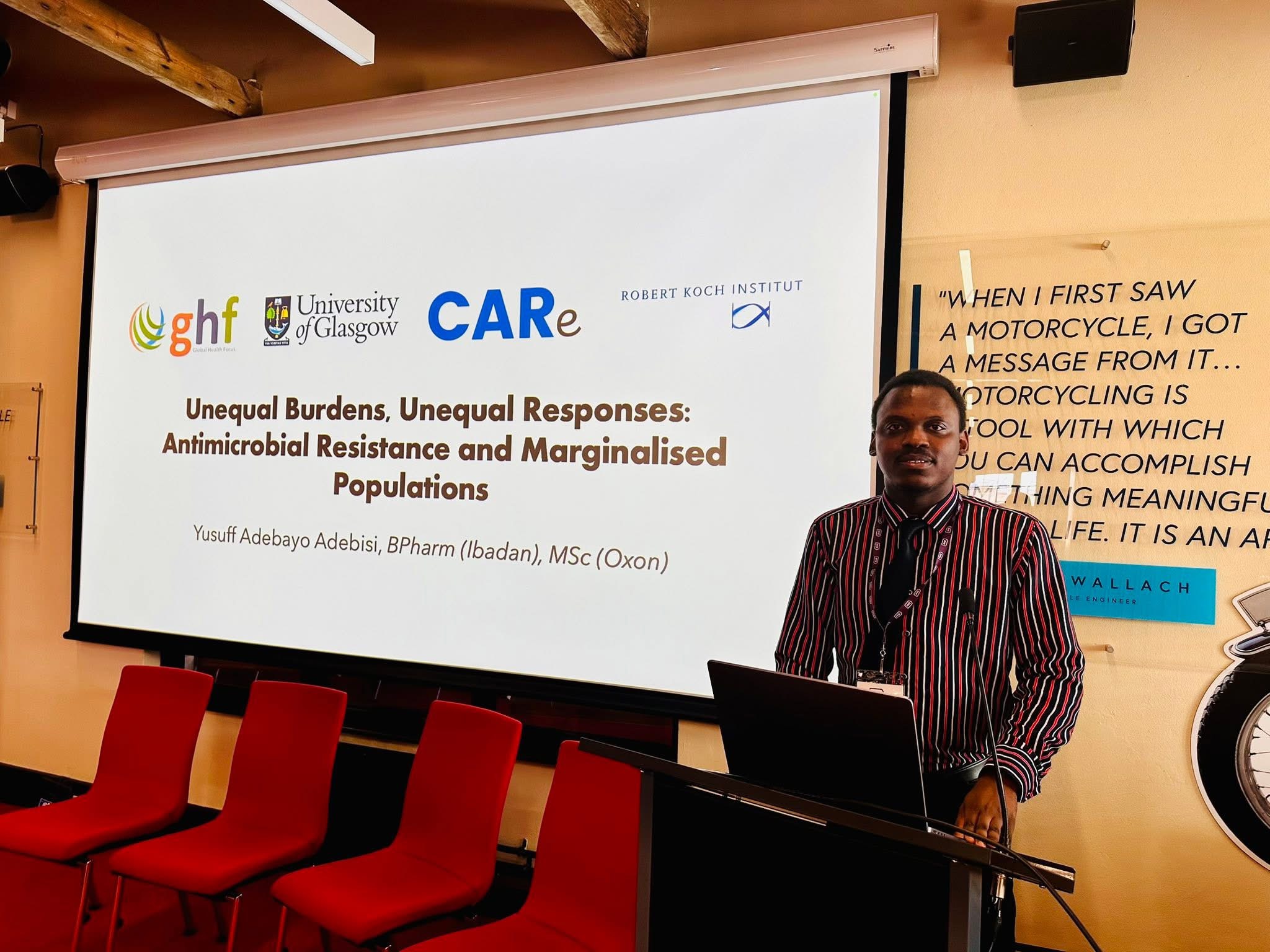
Antimicrobial resistance (AMR) is often described as a slow pandemic, but for many communities across Africa, its consequences are already immediate and severe. While technical solutions such as surveillance systems, antimicrobial stewardship programmes, and new drug development remain essential, they are not enough on their own. AMR does not emerge in a vacuum. It is shaped by the social, economic, and structural conditions in which people live, seek care, and access medicines. If these realities are ignored, our response will remain incomplete.
This principle sits at the heart of two recent projects I led, both funded by the Robert Koch Institute under the CARE programme. Together, these studies examine AMR through an equity and people-centred lens, asking a simple but urgent question: who is being left out of national and regional AMR responses?
Leveraging a people-centred approach to combat antimicrobial resistance in Africa
Read Full Paper →An Equity-Focused Systematic Analysis of Antimicrobial Resistance National Action Plans in 14 West African Countries
Read Full Paper →In our commentary in Tropical Medicine and Health, we argued that AMR strategies in Africa must move beyond purely biomedical framings. Resistance is closely linked to poverty, limited access to quality healthcare, weak supply chains, poor water and sanitation infrastructure, gender inequality, and gaps in diagnostics. In many settings, people rely on informal drug sellers because formal systems are inaccessible or unaffordable. Others are forced to use incomplete antibiotic courses due to cost constraints. These are not individual failures; they are systems failures.
A people-centred approach therefore becomes critical. This means strengthening primary healthcare, ensuring access to affordable quality-assured antimicrobials, expanding vaccination and prevention programmes, and embedding AMR efforts within universal health coverage reforms. It also means recognising that communities are not passive recipients of policy; they are active partners. Local knowledge, cultural context, and trust are indispensable to behaviour change and sustainable stewardship.
Our second study, published in Tropical Medicine & International Health, took this conversation further by systematically analysing AMR National Action Plans (NAPs) across 14 West African countries. Using a four-domain equity framework, we assessed whether these plans recognised equity, identified vulnerable populations, proposed tailored interventions, and integrated equity into governance and monitoring.
The findings were sobering.
While all countries adopted a One Health framing, equity was inconsistently embedded. Few NAPs explicitly mentioned equity, and none incorporated equity indicators into monitoring systems. Vulnerable populations such as people living with disabilities, displaced communities, migrants, people with substance use disorders, and incarcerated populations were rarely centred in strategy design. Even where groups were mentioned, interventions were typically broad and non-specific, limiting real-world impact.
This gap matters. AMR risk is not evenly distributed. Those with the least access to prevention, diagnostics, and effective treatment often bear the highest burden of resistant infections. When policies fail to account for this, they risk reinforcing — rather than reducing — health inequities.
The path forward is clear.
Future AMR strategies must explicitly identify at-risk populations, integrate disaggregated data systems, include measurable equity indicators, and ensure affected communities participate in planning and oversight. Multisectoral collaboration must extend beyond institutions to include civil society, patient groups, and grassroots organisations.
AMR is not only a microbiological threat; it is a social justice issue. Building resilient responses requires more than laboratories and guidelines. It demands equity, inclusion, and shared ownership.
Because in the fight against antimicrobial resistance, no one should be excluded.

Comments
Loading comments...
Leave a Comment
Share your thoughts on this article.