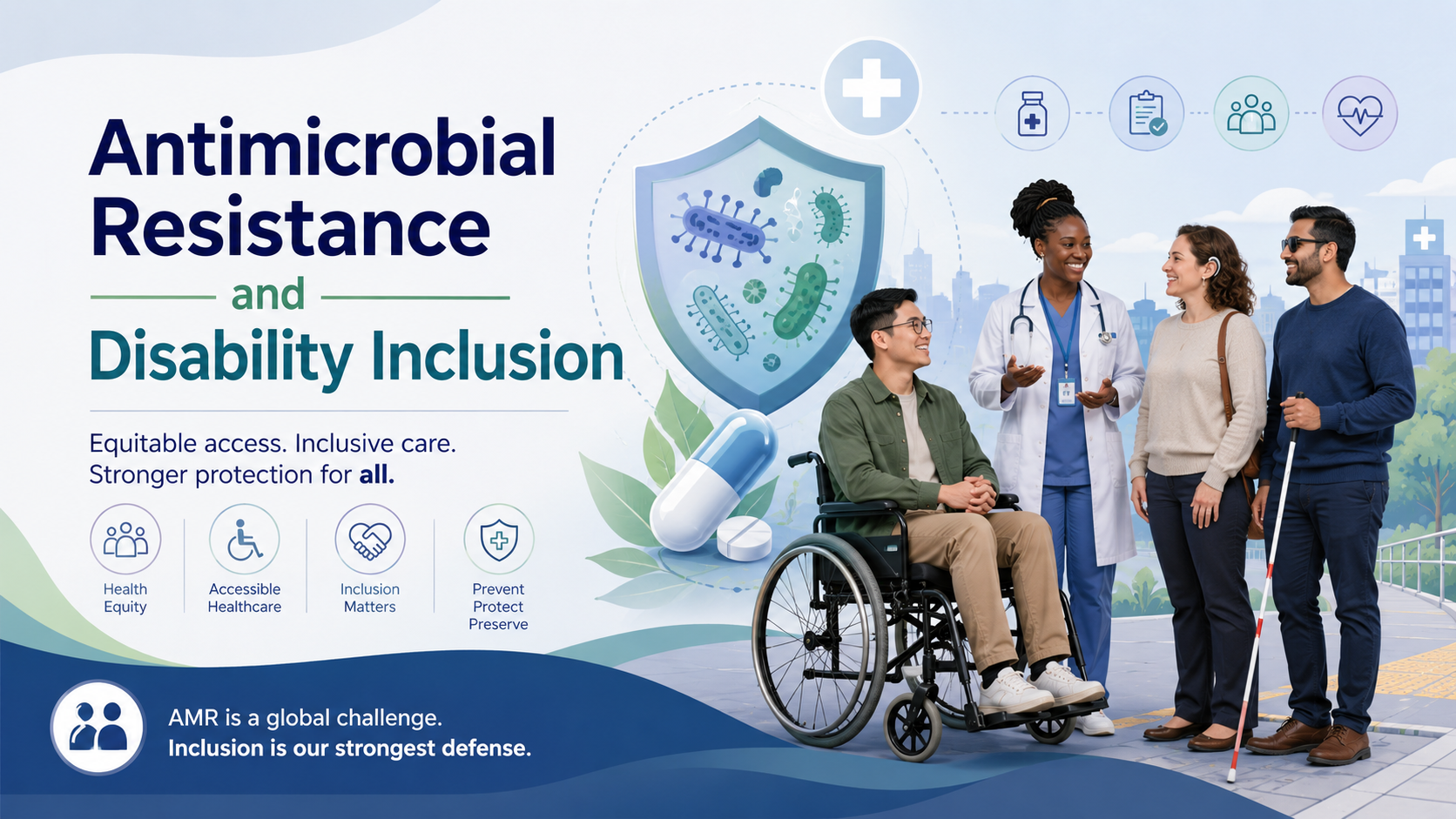
Antimicrobial resistance (AMR) is one of the major global health challenges of our time. But an important question receives far less attention: what does antimicrobial resistance mean for people with disabilities?
I explored this question in my 2024 correspondence, “Antimicrobial resistance and people living with disabilities,” published in The Lancet. The intersection between antimicrobial resistance and disability deserves much greater attention in research, policy and antimicrobial stewardship.
AMR is also a health equity issue
Antimicrobial resistance occurs when microorganisms such as bacteria no longer respond effectively to medicines used to treat infections. This makes infections harder to treat and can increase the risk of severe illness and death.
The scale of the problem is substantial. An influential global analysis estimated that, in 2019, 1.27 million deaths were directly attributable to bacterial AMR, while approximately 4.95 million deaths were associated with it. At the same time, the World Health Organization estimates that around 1.3 billion people — approximately one in six people worldwide — experience significant disability.
Yet disability is rarely central to discussions about AMR. That matters, because the burden of antimicrobial resistance is unlikely to be experienced equally across populations.
Why might people with disabilities face particular challenges?
There is an important evidence gap here. We still need stronger epidemiological research directly quantifying the burden of resistant infections among different groups of people with disabilities. However, there are several pathways that deserve investigation.
Some people with disabilities have frequent contact with hospitals, clinics and other health-care services. Greater interaction with health-care environments can mean more opportunities for exposure to infections and antimicrobial treatment.
Certain individuals may also have chronic health conditions, require repeated courses of antibiotics, or use medical devices that can increase susceptibility to infection. These circumstances vary enormously between individuals and disability groups, which is precisely why disability-specific evidence is needed rather than treating people with disabilities as a single homogeneous population.
But this is not simply a clinical issue.
Social conditions matter too
Disability and health are shaped by the environments in which people live. People with disabilities can encounter barriers to health care, inaccessible services, financial difficulties and inadequate health information. These barriers may delay diagnosis or treatment of infections and make appropriate medicine use more difficult.
Accessible communication is therefore part of antimicrobial stewardship.
Instructions about when antibiotics are needed, how they should be taken and why they should not be misused need to be available in formats that people can understand and use. This includes considering people with visual, hearing, intellectual, cognitive and communication disabilities.
A successful AMR strategy cannot be considered inclusive if important groups cannot access its messages or services.
What needs to change?
In my Lancet article, I argue that disability inclusion should become part of the wider response to antimicrobial resistance. This means:
- Incorporating disability into AMR policies and national action plans.
- Improving the accessibility of health services and antimicrobial information.
- Strengthening disability awareness among health professionals.
- Involving people with disabilities and their representative organisations in decisions that affect them.
It also means improving the evidence base. Future research should examine antibiotic prescribing, health-care-associated infections, resistant infections, treatment outcomes and antimicrobial stewardship among people with different types of disabilities and across different living arrangements.
Leaving no one behind in the fight against AMR
Antimicrobial resistance is not only a microbiological problem. It is also a question of health systems, access, inequality and inclusion.
If global efforts to tackle AMR overlook the needs and experiences of more than a billion people with disabilities, an important dimension of the problem remains invisible.
Disability inclusion should therefore not be an afterthought in antimicrobial resistance policy. It should be part of how we design research, deliver health care and build equitable antimicrobial stewardship from the beginning.
Read the original article: Yusuff Adebayo Adebisi. Antimicrobial resistance and people living with disabilities. The Lancet. 2024;403(10441):2289. doi:10.1016/S0140-6736(24)00429-X

Comments
Loading comments...
Leave a Comment
Share your thoughts on this article.